Showing posts with label Veliz Books. Show all posts

Monday, May 4, 2026

Jake Kennedy : Sonora, by Chus Pato : Translated by Erín Moure

Sonora, Chus Pato
Translated by Erín Moure
Veliz Books, 2026


Did you see her fly?
she ascends the steps of the labyrinth
right to the top
where the planks wobble
where empty cages lie in heaps
where the dust and heat are suffocating
or up to the cone of light shining from the garden
She lives in that house
and in that one
and in the apartment
and in the others 

with the wraiths. (13)


Please let me reside here a little longer in the productive and wild space called not-knowing knowing. And please let me stay here where it’s the body’s knowing that prevails because (because because) the sparked-up heart or the tingling gut or the keen tongue isn’t fussed at all about contradiction and paradox and ambiguity. One hopes a single poem can create such an effect and yet this whole book—this whole sonorous Sonora—acts as a portal to mysteries that cannot easily be said or shared without ourselves (reader-listeners) resorting to new logics of expression.

Sonora is tremendous Galician poet Chus Pato’s latest (12th !) book of poetry and it’s also the winner of both the 2024 National Poetry Prize in Spain and the 2024 Spanish Critics’ Prize for Poetry in Galician. The book is translated by her long-time translator—and fellow astonishing poet—Erín Moure. Importantly, Moure’s own poetry has always understood the book as a world (or worlds), of sorts, in which all physics and ecosystems and experiences within are subject to the love- and play-powered lawlessness of poetry itself. This means that the world of the book—its wild logics—permits of paradox, ambiguity, contradiction, the lateral, the unknown, the feminine, the queer, rather than acting as a container of the linear, the statistical, the macho, the cohered, and the factual. Moure as translator/bringer-overer-into-a-Canadian-English of Pato’s Galician insures that we feel—in our bodies—the granular or (then) granite texture of “the linguistic rock” or “the language rock” (19) of Pato’s world.

So! Sonora. Sonora. Sonora. I know that you can’t hear me speaking aloud the title of this book but I’m doing it… with this Canadian unilingual mouth and—this will be especially hard to prove to you (you are way over there!)—this everyday Canuck mouth (my mouth) that is now made of silica, lagoon water, potato skin, yarn, dirt, bird bones, and asphodels. I’m trying to figure out how poetry—when it communicates as the real-deal stuff—is read more by the stomach or the ear or the fingers or the groin or throat or blood than it is by the brain.

Or I’m not trying to figure it out I’m just trying to stay in the sensation of my body-as-the-mind-that-understands-sounds-and-images-as-truth and then to work up the courage to say it and share it here. Reading César Vallejo has this effect on me and reading Wanda Coleman has this effect on me and reading Pato has this sublime, mysterious effect on me, too: the poems communicate themselves nearly as transfusions—as opposed to static messages—to the heart or mind.

Sonora is comprised of nine waves or nine concentric circles and the force of the book—the singular drop that creates these entrancing soundwaves/gongings—is the death of the poet’s mother. I have a sense, too, from the opening poem, of experiencing each poem as a cascade of images—as if multiple colour slides were overlain in the projector and also as if some of the slides depict deep, European history while others depict more local and immediate moments. The opening poem to Sonora begins with these lines:

There are images that are dikes between the body
and the violence of the body
they’re outside memory
they extend like the strata of an exemplary life (9)

In this way each poem presents multiple slides or strata or “imaxes” (“images” in Galician) that carries historical and personal time. My body receives the poems as utterances of history and of the autobiographical and yet so laminated are these scenes/sonorities that they arrive as harmonious differences not as discrete units. As a reader I love this experience because the sensation is of listening and seeing multiplicities all-at-once. The opening poem ends this way:

nourished by roe deer
in the forests of Brabante /
the bloodbath happens
To stand up in the haze
and go off toward somewhere
interminable
the law traversed by the signs that are time (9)

Are we in the ancient Sonian forest watching deer move through the oaks and beeches? At the same time are we hallucinating (“beyond memory”) an entire other life as an imagined being that moves into unknowable pockets of time? Sonora produces a kind of magic for the reading body where one is not reading to extract a single statement but rather to enter, again, a radiant world of colour slides-upon-slides.

If the core of the book creates a multi-rayed elegy for the death of Pato’s mother this death is tied to the roots and to the stones and to the waters of history and time, too. As Moure says in her afterword, “The sonority of death, for Pato, is indeed geolinguistic. In her poems, the sonority of mountains, of granitic domes, of meadows and vegetation covering these domes, of the Antela lagoon, of prehistories and histories, is the sonority of being born and weathering time. Only when we are beyond consolation, the poet says, are we born.” (221) One of the magics of a poetry that communes with the body is to integrate the body back into history—to allow the body to feel its presence throughout time. Sonora—in this living English—is an astonishing work and a momentous event: a capturing of waves of both lyrical and far-reaching historical time, and an expression of the elegiac that ever lends the reader hope and giddy ongoingness.


Jake Kennedy—just this morning—saw the paw-prints of mhúyaʔ in the dusty table-top but he did not see mhúyaʔ itself... So the dusty table-top was and must be and is the brief [rain and wind coming] book of the mhúyaʔ. Yes. Lastly, Mr. Jake has a new book of poems forthcoming (April 2027) from the University of Alberta Press: The Sound Called The Wings of the Body. Thank you!


Monday, July 5, 2021

Genevieve Kaplan: Toad Press: Working Alone, Working Together


I started the Toad Press International chapbook series back in 2003 for a variety of reasons. One reason was to stave off literary loneliness. I’d just finished my MFA program at Iowa, where I was lucky enough to also take courses in letterpress printing and book arts through the Iowa Center for the Book and meet cool translators though Iowa’s International Writing Program (IWP), and I wanted to find a way to stay involved in the writing world post-graduation. I was worried about losing connection with great writing, creative ideas, and literary enthusiasm as I ventured out into my post-MFA world.

Starting the press was pretty simple in those pre-internet days. We emailed literary friends and acquaintances to let them know we were starting a micro-press and were seeking translations. We took out a free classified ad in Poets & Writers. We received our first batch of submissions, and, with the help of our copy machine, our bone folders, and our long-reach stapler, in 2004 we published our first chapbook: Nick Moudry’s translation of Tristan Tzara’s Twenty-Five and One Poems.

Since that first publication, Toad Press has pretty much followed the same DIY aesthetic. We select 1-3 titles during our annual open winter reading period to publish each summer, and we fold and staple each chapbook by hand. We still use the website (well, the blogspot) that we built in 2004. A few things have changed: we learned pretty quickly that Poets & Writers wasn’t the best place to reach translators, and we made virtual friends with more focused organizations like the American Literary Translators Association (ALTA). Around 2009, we created a Facebook page and started growing a larger audience. In 2011, we started using Submittable (then named Submishmash, and available for free) to manage our submissions and list our chapbooks for purchase.

Today we picked up the freshly trimmed copies of our latest chapbook, The Cheapest France in Town (poems by Seo Jung Hak, translated by Megan Sungyoon) from our local shop. The owner asked who’d folded the books he’d just trimmed and looked rather aghast when I said I’d folded them all myself, at home. Some people would call that crazy, he said. Well, here at Toad Press we like to keep things cheap and nimble. And we like to keep our hands busy.

To be clear, the “we” of Toad Press has essentially always meant “me.” Sean Bernard, my partner in all things, helps choose what to publish and weighs in on cover and design choices, which is excellent. When it comes to communicating with translators, and doing the work of formatting, designing, printing, folding, and publicizing the chapbooks, though, that’s all me. These are aspects of the small press world that I really enjoy, and I choose to do them because they make me happy. I like participating in the process that moves words off the screen and makes them into little books you can pass to a friend. I like knowing that I’ve touched and folded each of the pages in our chapbooks. I like that I know where all the little hiccups were. As a writer myself, I enjoy getting see the other side of the publication process; lifting up writers and translators, making literary work physically accessible, giving a translator a book to hold in their hands that makes their eyes light up: these are all wonderful things. And my ongoing work with Toad Press helps me feel like I’m always a productive part of the larger literary community.

On the flip side, running what is essentially a one-woman chapbook operation means that I’m continually aware that choosing to publish literary translations is a choice I alone am making. I choose to invest weeks of energy into each chapbook. I send many emails. I buy reams of paper from Costco. I walk the aisles of Kelly Paper looking for the right cover stock. I print proofs and proofs and proofs. I drive to the copy shop. I fold and fold and fold. I deplete boxes of staples. They know me at the post office. And so on.

Running Toad Press is essentially a part-time job that I don’t get paid for. Which means that when I’m making choices about how to run the chapbook series, I must also make the choices that work best for me personally, choices that suit my budget and my whims and my other commitments and my lifestyle. I’m also aware that these choices may not be in the best interest of “the press” as its own successful entity. Almost every summer—while I’m printing, folding, stapling—I ask myself: Should I keep doing this? Am I the right person to do this?

The answer to those questions has always, ultimately, been yes. Last summer, though, I started asking myself not only the usual questions about carrying on, but also some new ones: what would happen to the press if I stopped wanting to make chapbooks? If I couldn’t afford to commit the time each summer? If I got sick and could no longer spend the energy folding? If, with limited time or money resources, I needed to focus other people or projects instead?

Usually I’m drawn to the ephemeral nature of the chapbook form, but when I started thinking about the potential end of Toad Press, thinking about the press as having a sort of expiration date made me sad. These concerns made me realize that I really wanted to keep Toad Press viable, and that viability might involve some changes. While we didn’t necessarily want to make the press larger, or bring more volunteers aboard, or totally change our DIY production process, we did want to make a space for more potential and possibility. Our solution was to think about collaboration, teaming up with like-minded people already successfully doing their own thing in order to hopefully make both of our things better.


*


I’d admired Veliz Books’ publications long before I submitted my poetry manuscript (aviary) during their open reading period in 2019. It was selected for publication, and I had a wonderful experience working with Lau Cesarco Eglin, Kristal Acuña, and everyone on the Veliz Books team. Lau’s editorial style, her feedback and suggestions as we worked together on (aviary), was so helpful; I appreciated her close readings, and how she was able to be assertive but also make author feel heard. I’d long run Toad Press by imagining how I’d most like to be treated if I was the publishee rather than the publisher and working with Veliz as an author felt like much the experience I’d ideally imagined.

As Sean and I got to know Veliz better, it became more and more apparent how our interests—what type of writing we tend to publish as well as who we publish—overlap. Toad Press’s focus is on contemporary literary translation; Veliz Books publishes poetry and prose in English, as well as translations from Spanish, Portuguese, and Galician. Earlier this year, Veliz published Naomi Washer’s novel Subjects We Left Out; Toad Press had published her translation Experimental Gardening Manual, poems by Sebastián Jiménez Galindo in 2019. Veliz Books published The Ghetto, Seth Michelson’s translation of Tamara Kamenszain’s El ghetto in 2018; Toad Press published Roly Poly, Michelson’s translation of poems by Victoria Estol in 2014. Too, we learned that Veliz was down a prose editor. Might Sean be of service, we wondered?

We reached out to Veliz Books with our ideas about collaboration, our concerns about being a solo operation, and our enthusiasm for the future. Delightfully, it turned out we found our new literary partner! After extensively thinking through the pros and cons for both our presses, having many talks and discussions, we are all excited that Toad Press has officially become an imprint of Veliz Books.

Veliz Books and Toad Press agreed that both presses could gather momentum and get more excellent work done if we work together. As an imprint Toad Press will be able to expand its reach and get our translations into the hands of more readers. Our partnership means our presses can participate together in the literary world: at conferences, readings, and other events. Together, we look forward to continuing to support exciting, literary writing and cheering on our authors and translators. Hopefully we’ll also come up with some new fun literary initiatives to collaborate on.

It’s my sense that things will not change for Toad Press overmuch now that it’s an imprint, at least not very quickly. Sean and I will continue selecting and publishing Toad Press chapbooks. I’ll keep folding and stapling and mailing. We’ll keep our current blogspot website, and we’ll continue using our trusty Submittable account for submissions and sales.

That said, our partnership has already resulted in some rather professional-feeling changes for our little chapbook series: we now have a Toad Press tab on the Veliz Books site and our chapbooks are available for purchase in the Veliz Books store. We’ve added the Toad Press + Veliz Books logo to our chapbooks, too, to better signify our connection.

I’m excited about what Toad Press’s new imprint status means for the press, but I’m also excited about what it means for me. I started Toad Press because I wanted to create new literary connections, and because I wanted to stay involved in the literary community. But I realize in some ways my DIY methods have been antithetical to community building. Now, Toad Press is part of team. So next month, when I’m home formatting and printing and folding copies of Faith in Strangers, Mark Tardi’s translation of Katarzyna Szaulińska’s poems, the questions I’ll be asking myself will be a little bit different. Instead of wondering about if I should keep the series going for another year, I will ask instead: Which Veliz title would pair well with this translation? How can Toad and Veliz use our platforms to further promote and share various literary voices? Should we offer a book bundle for our readers? What else might we take on together? How and when can we best support our translators, our authors, and each other?

I’m excited to know I’ll be having more of these discussions about translation, collaboration, publishing, and literary community. Almost 20 years after starting the press, I’m having new ideas—not just about what I can do, but what we can do—and seeing so much possibility and potential. And that feels great.


The Toad Press International Chapbook Series publishes contemporary, exciting, beautiful, odd, and avant-garde chapbook-length translations of poetry and prose. Toad Press is an imprint of Veliz Books. Toad Press chapbooks are edited and published by Genevieve Kaplan & Sean Bernard

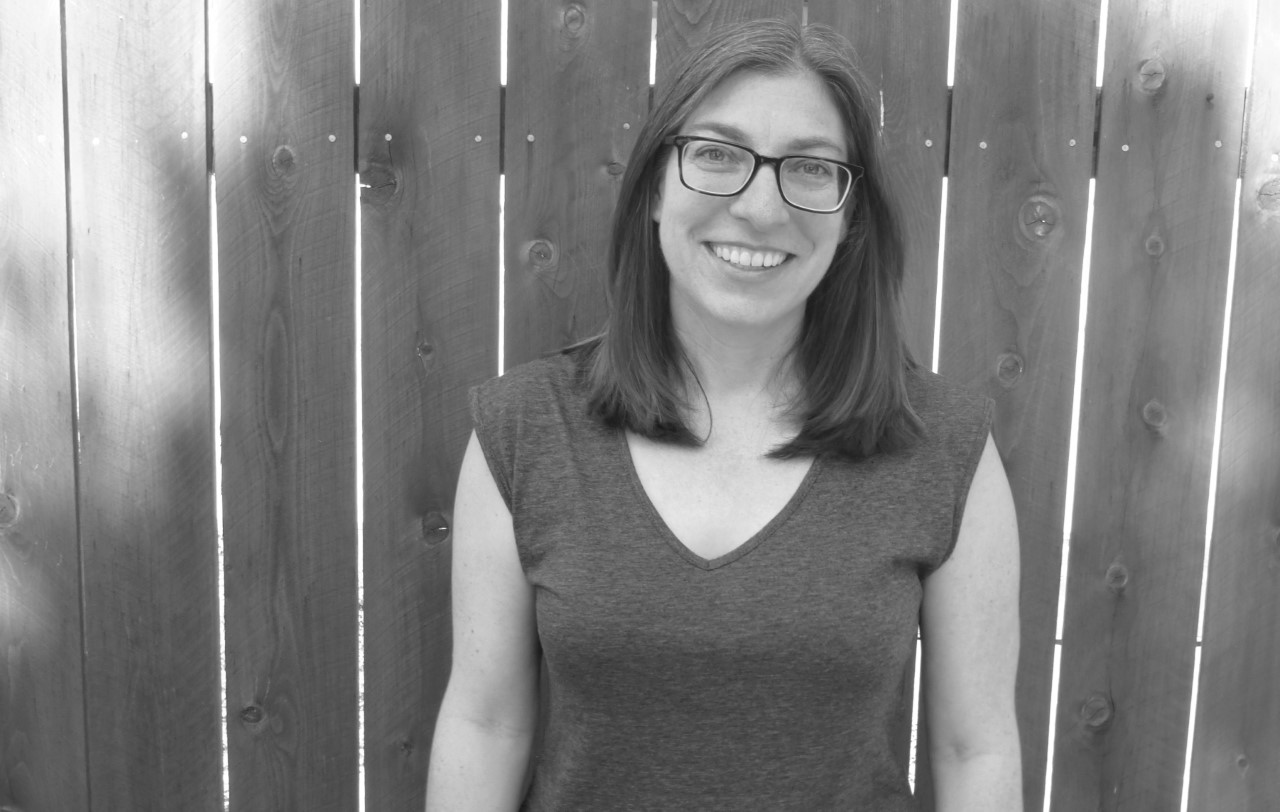
Genevieve Kaplan is the author of (aviary) (Veliz Books); In the ice house (Red Hen Press); and four chapbooks, most recently I exit the hallway and turn right from above/ground press. Her poems can be found in Posit, Can we have our ball back?, Poetry, and other journals. She lives in southern California where she edits the Toad Press International chapbook series, publishing contemporary translations of poetry and prose.

most popular posts